You can easily translate the web content to your language with the Google Chrome.
Do szybkiego tlumaczenia na Twoj jezyk, polecam uzywanie przegladarki Google Chrome.

Friday, March 29, 2013

Cerebral Palsy (CP)

Waht is Cerebral palsy (CP)?
CP it’s a term that refers to a group of problems with movement that result from abnormalities in brain development or brain damage in the first year of life. Very important feature of the condition is that it is not progressive, meaning that conditions where the brain damage continues to get worse are not included under CP. However, as all parents and professionals who treat CP know, the movement problems suffered by the child certainly change with time, growth and development. Problems with movement are the feature of CP. In addition these children often have other problems, including intellectual disability (from mild to very severe) and problems with sensation (including vision etc). It is believed that CP affects about one in every 500 live births.
When parents are first told that their child has CP, one of their first concerns is understanding how the CP will evolve in the future – its severity, how bad things will become, and particularly whether their child will ever walk. Unfortunately, health professionals have very limited information to base answers upon for any individual child. The course of CP is highly individual and variable.

Types of Cerebral Palsy 

  1. Spastic Cerebral Palsy
Spastic cerebral palsy is the most common type of cerebral palsy and accounts for approximately half of all cerebral palsy cases. It is characterized by stiff, contracted muscles and sometimes, by paralysis. Patient has stiff, jerky movements and often difficulty letting go of something in his hand.

There are five types of spastic cerebral palsy:
  • Diplegia : affects both arms or both legs
  • Hemiplegia : affects limbs on one side of the body
  • Quadriplegia : affects all limbs
  • Monoplegia : affects only one limb. It is very rare.
  • Triplegia : affects three limbs. It is very rare.
  1. Ataxic Cerebral Palsy
Ataxic cerebral palsy occurs when the muscles are too weak. Patient appiers shaky and unsteady. Approximately 10 percent of cerebral palsy sufferers have ataxic cerebral palsy. The birth injury ataxic cerebral palsy affects balance, coordination, and depth perception. Afected typically walks unsteadily, has poor coordination, and difficulty honing fine motor skills.

  1. Athetoid Cerebral Palsy
Athetoid cerebral palsy occurs when the muscles fluctuate between being too tight and too weak. Patient has involuntary movement in the face and arms, and difficulty holding them in an upright position. Some afected also experience speech problems, drooling, and other difficulty in controlling the facial muscles. Approximately 20 percent of all cerebral palsy sufferers have athetoid cerebral palsy.

If the child's athetoid cerebral palsy was caused by a birth mistake, it may be a cerebral palsy case.

  1. Mixed Cerebral Palsy
Mixed cerebral palsy occurs when the muscles are affected in a combination of any of the types listed above. Approximately 20 percent of all cerebral palsy sufferers have mixed cerebral palsy.


Wednesday, March 20, 2013

Apraxia Treatment

Children Apraxia of Speech (CAS) is a disorder of speech coordination, not strength.

Child with Children Apraxia of Speech (CAS) presents with:
  • Poor self-monitoring,
  • Poor imitative skills for articulation,
  • Many voicing errors.
Resurge proves that:
  • Child with CAS should receive frequent (3-5 x per week) and intensive treatment.
  • Child with CAS should be seen alone for treatment.
  • As the child improves, he may receive treatment less often and be seen in group.
  • Child with CAS should practice speech often.
  • Child with CAS needs a supportive environment to feel successful with communication.
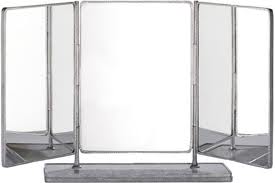
The focus of intervention for CAS is on improving the planning, sequencing, and coordination of muscle movements for speech production. Isolated exercises designed to "strengthen" the oral muscles will not help with speech. To improve speech, the child must practice speech. Feedback from a number of senses, such as tactile "touch" cues and visual cues (e.g., watching him/herself in the mirror) as well as auditory feedback, is often helpful. Some kids can benefit from using sign language or Augmentative Alternative Communication system, e.g., a portable computer that writes and/or produces speech. Check my posts about AAC devices
Once speech production is improved, the need for these systems may lessen, but it can be used to support speech or move the child more quickly to higher levels of language complexity. With this multi-sensory feedback, the child can more readily repeat syllables, words, sentences and longer utterances to improve muscle coordination and sequencing for speech. Practice at home is very important. One of the most important things for the family to remember is that treatment of apraxia of speech takes time and commitment.

REMEMBER TO
Speak up, Talk big, Say it loud and Practice often.

USE rhythmic, melodic, and visually marked syllable presentation.
To improve awareness of oral mechanism :

  1. Use a mirror for visual feedback.
  2. Teach appropriate speech movements using verbal and visual cues, e.g. “Press your lips together”.
  3. Engage in imitation game, “You are a mirror”.
  4. Exaggerate oral and facial postures (first without and after with voicing element).
  5. Use: dry / wet / chewy / liquids, worm / cold snacks, tooth brush, tongue depressor, straws, dental floss, chewy toys, blow toys, bubbles, musical instruments, cold/hot objects/food (i.e. gum, noodles, metal spoon, lotion, own fingers, string).
Work on sounds:
1.      Imitating sounds [i.e. bye / baa-baa / peep / bee / oops!].
2.      Old/familiar not new words (i.e. go, up, eat).
3.      Two syllable words:
  • The some syllable words (i.e. mama, dada, night-night, bye-bye, oh-oh, ooh-ooh).
  • Different syllable presentation.
4.      Work on phonological skills:
  • Use the sound a child has already in his repertoire.
  • Add new sounds:
1.      ­V - vowels
·         V-V identical vowels (i.e. /a-a-a/, /e-e-e/, /i-i-i/, /o-o-o/, /u-u-u/)
·         V-V different vowels (i.e. /a-i-a-i/, /a-o-a-o/, /a-u-a-u/)
2.      C – labial visually marked consonants /b/, /p/, /m/ + V
·         CV-CV identical syllables (i.e. /ba-ba/, /be-be/, /bi-bi/)
·         CV-CV different vowels (i.e. /ba-be/, /be-bi/, /bo-bu/, /be-ba/, /bi-   be/, /be-bo/, /be-bu/, /ba-bi/, /ba-bo/, /ba-bu/)
·         CV-CV different consonant (i.e. /ba-ma/, /ba-pa/, / ma-ba/, /mapa/)
·         CV-CV different consonant and vowels (i.e. /ba-mi/, /pa-bi/, /be-mi/).
3.      C – other less visually marked consonants /t/, /d/, /k/, /g/, /h/ + V.
5.      Use phrases to repeat.
6.      Use sentences to repeat.

List of words to work on

P

Pal, Pam, pan, pat, peg, pen, pet, pie, pig, pill, pin, pit, pod, pop, pot, pup pony,

M

Mad, make/ made, man, mat, many, map, mat, men, met, mom, moon, mop, mud, mug, my, music

K

Key, kiss, kick, kid/kids, king, kiss, kit, kite, kitten, kitty

T

Tag, tail, tall, tan, tap, tape, Ted, ten, tin, tip, top, two, tub

H

Hair, ham, hand, hat, has, have, hay, head, hen, he, her, hill, hip, hit, hoe, hop, hot, hug, hum, hut, house, happy

B

Bag, bag, bank, bang, bat, ball, bee, Ben, bet, bib, bid, bin, box, boy, bad, bug, bun, bus, but

N

Nail, nap, net, nest, nose, not, nut

G

Gag, gas, gate, get, gift, goat, gone, goody, gum, gut

D

Dad, dam, day, dell, desk, dig, dip, dock, dog, dot, down, duck

L

Lake, lamp, lap, left, leg, like, lip, lion, lock, log, long

Tuesday, March 19, 2013

Childhood Apraxia of Speech (CAS)


Childhood Apraxia of Speech (CAS) is also known as Developmental Verbal Dyspraxia (DVD) or Developmental Apraxia of Speech (DAS.) CAS is a motor speech disorder. There is something in the child's brain that is not allowing messages to get to the mouth muscles to produce speech correctly, therefore CAS is not a muscle but cognitive disorder (although it may have some impact on language as well as speech). The problem occurs when the brain sends muscles an information what to do. Somehow that message gets jumbled. Visually explaining it is almost like trying to watch a cable TV station without a right decoder. There is nothing wrong with the TV station and nor with the set. It is just that the set can't read the signal that the station is sending out. The child's language-learning task is to figure out how to unscramble the mixed message but the child is not able to do it.
Visible symptoms of Childhood Apraxia of Speech
  • A child presents little or no babbling in infancy and has just few consonants in the repertoire.
  • A child’s understanding of a language is much better than production.
  • A child’s speech is slow, effortful, or halting. Sometimes a child seems to struggle.
  • A child is very hard to be understood.
  • A child may make slow progress in therapy.
Childhood Apraxia of Speech has much more effect on volitional, voluntary, creative speech than on automatic speech. This means that the more the child wants to communicate a particular message, the harder it becomes! So, if you happen to hear him saying something once when there is no pressure, and than you say, "Say it again!", you can be guaranteed that he won't be able to repeat it again. It is essential to put as minimum communication pressure on a child as possible. Low-pressure verbal activities are the most important thing parents can do to help. These will include: songs, especially repetitive one, finger-plays, poems, verbal routines, repetitive books and daily routines, e.g. social greetings, prayers.
You can make other activities into verbal routines: make up little sayings or poems that you say every time you do the same thing, label instead of counting objects in counting books, e.g. Two cars: car, car, dog, verbalize repetitive activities, e.g. while setting a table, cup, cup, cup, bowl, bowl, bowl, plate, plate, plate, fork, fork, fork, and so on. Don't make a big fuss about whether or not your child is talking or singing along; just provide a supportive environment for him to do so. Never say: You can't have it unless you say it first. That would be a torture for a child.
In a case when a child is not able to communicate effectively use sign language or a communication board. It will decrease child’s frustration and help with speech development. Dyspraxia may affect other motor functions, such as fine motor control, gross motor planning and further language functions like learning grammatical words, e.g. the, is, or, more complex grammatical forms like passive, spelling, putting words together into a sentence or sentences together into a paragraph.
Occupational therapy, physical therapy, and learning disabilities assistance are often helpful for children with Childhood Apraxia of Speech. CAS can be a very frustrating disorder at times. It is common for children with apraxia to make a good progress for a little while, then none, then more, etc. The therapy is helping, even if we can’t see the effects immediately.
Stackhouse, J. (1992), Developmental verbal dyspraxia: A longitudinal case study, Cambridge, MA: Blackwell Publishers.
Caruso, A. and Strand, E. (1999), Clinical management of motor speech disorders in children, New York: Thieme.
Crary, M. (1993), Developmental motor speech disorders, San Diego Singular.
Hall, P., Jordan, J., and Robin, D. (1993). Developmental apraxia of speech, Austin, TX: Pro-Ed.
Velleman, S.L. and Strand, K. (1994), Developmental verbal dyspraxia. In J. E. Bernthal and N. W. Bankson (Eds.), Child phonology: Characteristics, assessment, and intervention with special populations, New York: Thieme.
Velleman, S. L. (2002). Childhood apraxia of speech resource guide, San Diego: Singular.
The Childhood Apraxia of Speech Association of North America (CASANA) http://www.apraxia-kids.org/

Sunday, March 10, 2013

Selective Mutism Treatment

A friend of mine, a kindergarten teacher, asked me for some suggestions how to approach a student with a selective mutism.
First of all we have to know that Selective Mutism, known also as elective mutism, usually happens during childhood, often before a child is 5 years old. A kid with selective mutism can speak but chooses not to speak in certain situations. Failure to speak is not due to a lack of knowledge or comfort with the spoken language, also not due to a communication disorder (e.g., stuttering) but, due to an anxiety, social phobia, excessive shyness, fear of social embarrassment, social isolation and withdrawal.
Selective mutism is described in the 2000 edition of the Diagnostic and Statistical Manual of Mental Disorders (DSM-IV-TR: pp.125-127).
A silent child after being diagnosed with a selective mutism should be seen and treated simultaneously by professionals: speech-language pathologist (SLP), psychologist or psychiatrist along with teachers and the family members.
It is important to gather all background history, a health report, hearing screening, oral-motor examination, educational review, parent/caregiver interview and a speech and language evaluation. Based on that knowledge we must individualize the best for the child treatment. A treatment, which might apply a combination of different strategies.
In Stimulus Fading Technique you involve the child in a relaxed situation with someone they talk to freely, and then very gradually introduce a new person into the room.
In Shaping Technique you use a structured approach to reinforce all efforts by the child to communicate, (e.g., gestures, mouthing or whispering) until audible speech is achieved.
In Self-Modeling Technique you let the child to watch videotapes of himself performing the desired behavior (e.g., communicating effectively at home) to facilitate self-confidence and carry over this behavior into the classroom or setting where mutism occurs. In addition the child can learn from a peer or adult therapist how to react in a calmer manner to the stressful situation. Research studies support the efficacy of using audio tapes or videotapes in treating selective mutism.
In Contingency combined with Stimulus Fading Strategy the desired behavior (e.g. speaking out loud) is elicited with a stimulus or prompt; then, the prompt is gradually faded by decreasing the number of prompts, eventually to zero.
In Behavior Shaping Technique combined with Positive Reinforcement the child is rewarded every time he exhibits behavior that is closer and closer to the desired behavior (e.g. speaking out loud). Positive Reinforces can be a token economy or reward system, e.g. a favorite book for perfect attendance at school, a movie for attending social events.
In Systematic Desensitization the child re-learns how not to be upset or anxious. Instead of feeling uncomfortable in a social situation, the child connects feelings of calm with the previously anxiety-provoking social situation. Instead of automatically reacting to the anxiety-provoking situation with autonomic nervous system activation, the behavioral response is reconditioned to that of relative autonomic nervous system deactivation.
Extinction: The undesired behavior (refusing to speak, hiding, refusing to go to school) is ignored, and the lack of attention to the behavior causes the behavior to cease.
In In-vitro Graded Exposure the child imagines the stressful situation starting with the least stressful aspects, learning how to deal with these, and then following up with more stress-provoking aspects. This could include the use of scripted play therapy using real-life stressful situations with targeted responses for learning and incorporation.
In In-vivo Exposure the situation becomes less tension-provoking with repeated graded exposures as the situation becomes less new and more predictable. Careful real-life exposure (from less-threatening to more-threatening) to anxiety-provoking situations with postexposure discussion may be helpful, as actual experience of real-life situations determines whether resolution of the abnormal emotional response has taken place.
Aversive Interventions such as forcing the child to speak out loud generally does not encourage the behavior to occur more often.
In Social Problem-Solving Strategy the child is encouraged to view the social interaction that causes anxiety as a problem to be solved; this technique can be especially helpful when combined with the use of positive reinforces and fading of prompts.
Cognitive-behavioral therapy may be extremely helpful to improve the level of the child's self-esteem.                      
The main Speech Language Pathologist’s role will be to target the problems that make the mute behavior worse. He will try to correct any communication disorders, exercise the voice to make it stronger and use role-play activities to help the child to gain confidence speaking to different listeners in a variety of settings. The SLP may create a behavioral treatment program focused on specific speech and language problems, and/or work in the child's classroom with teachers.
The main teacher’s role will be to encourage communication, first using non-verbal methods (e.g., signals or cards) and gradually adding goals that lead to speech. The teacher will form small, cooperative groups that are less intimidating to the child, gradually increasing number of the members.
The main parents’ role will be to support and cooperate with the team.
Recourses:
Gail Goetze Karvatt, The Silence Within: A Teacher/Parent Guide to Working with Selectively Mute and Shy Children.
Wikipedia - Selective Mutism http://en.wikipedia.org/wiki/Selective_mutism
The organizations which have information on selective mutism:
Child Mind Institute
Selactive Mutism on Line http://selectivemutismonline.com/ also with the same video on ABC News http://www.selectivemutismcenter.org/home/home
Dr. Laurie Zelinger Innovative Play Therapy Technique used in Selective Mutism http://www.drzelinger.com/innovativeplaytherapytechnique.htm

Thursday, February 28, 2013

Straws Therapy

 
The easiest way to improve overall oral-motor function for speech purposes is simply to exercise the muscles while eating.  A very useful tool would be a straw. The use of straw in speech therapy is commonly known. For years straws have been an important utensil in feeding and lip rounding exercises. In the clients' opinion  the straws are fun and the food is a reward. The primary goal of straw is to concentrate on insufficient tongue retraction. These exercises encourage increased speech clarity whether the person has an inter-dental lisp or other varieties of phoneme distortions. Therapeutic straws have also been found to be useful when working with velo-pharyngeal insufficiency or patients that are recovering from a cerebral vascular accident (CVA). In these instances and numerous others, specially gradated straws are used in a hierarchical succession to work on a specific component of oral movement.
Internationally well known an American Speech Language Pathologist - Sara Rosenfeld-Johnson, M.S.,CCC/SLP has created a line of straws along with the related step-by-step exercises. She said that when she was initially using straws for feeding or lip-rounding goals, she was struck by the improved tongue retraction and as the result speech clarity. Since then straws have become one of my most important therapy tools for her. Further she says: “Traditional therapy methods start with the assumption of adequate tongue muscle function. The premise of traditional therapy would follow that if you listen to me when I say "ball" (auditory stimuli), and you look at a ball when I say it (visual stimuli), and if you hold the ball (tactile stimuli) when I say it, then through this multi-sensory approach you will acquire the ability to say "ball". Oral motor therapy (OMT) does not work like that, particularly with our special education clients who have reduced visual or auditory capabilities. OMT asserts that the translation of this tactile information has to take place in the mouth; that therapists must put something into their client's mouths that is going to increase their client's awareness of their mouth and that will, in a series of measured progressions, strengthen the target muscle groups. This oral muscular development and control is an important prerequisite which then enables the clinician to use traditional articulation therapy. At the therapeutic level straws have the promise of addressing a multiple array of disorders and muscle groups far beyond traditional practice. Let's review some basics. In English, in order to have connected speech (co-articulation) and speech clarity we have to stabilize the back of our tongue on the back of the palate. Then, whatever else our tongue is required to do, it moves from that position of stability. The tongue elements work with four basic movement components:
  • retraction/protrusion
  • back elevation/depression
  • tip elevation/depression and
  • the ability to spread the sides of the tongue.
When babies are born they have approximately a 50% back and 50% forward movement from the resting position called a suckle. As the child gets older and begins spoon and cup-feeding they achieve about a 75% retraction and 25% protrusion. They do not stick their tongues out during feeding. Those who do frequently present with feeding problems. Straws have been prescribed routinely for these occurrences because, at the very least, through straw feeding, the client can return to the 50%/50% suckle. But there is no reason to stop there, and, I would argue that allowing clients to suckle straws is therapeutically wrong IF treatment stops there. Suckling can actually exacerbate protrusion of the tongue. (It should be mentioned that sippy-cups, a popular feeding tool, encourage suckling, once again falling short of the preferred 75%/25% retraction/protrusion goal.)
By continuing to use a progressive series of increasingly more complex straws and thicker liquids we can teach the tongue muscle to retract. The goal is to achieve close to a 75% retraction; to achieve that position of stability. The back of the tongue in stabilized retraction allows the tip of the tongue to move side-to-side to alternating back molars; the very movement that is needed to chew food effectively. At this milestone we have clients who attain more eating independence and improved nutrition, both very important for children that have not progressed well with cups or spoons.
How do therapeutic straws address speech clarity goals? Children or adults with interdental lisps are missing this important component of stabilized tongue retraction. Clients who stabilize their tongue at the front of their mouth between their teeth, rather than in the retracted position of stability, are said to be fronting their sounds. If a client is using an interdental production on /t/, /d/ or /n/, which are the first stable retracted sounds in the developmental scale, the mastery of these sounds must occur before attempting to master /s/ or /z/. If a developmentally normal three-year-old interdentalizes on /n/ there is already a problem. In fact, any three-year-old with an interdental production on /t/, /d/ or /n/ needs help to retract the tongue, and further, any child with an identified speech problem who suckles, whether its a bottle, cup or straw, is maintaining their speech errors if they are secondary to interdental tongue placement. (If a developmentally normal four-year-old does not interdentalize on /t/, /d/ or /n/, has correct tongue blade retraction, but lisps on /s/ it is possible that the lisp is secondary to a developmental delay and may not need therapeutic intervention.)
How do we get clients on therapeutic straws and at what age or point in therapy? Muscles can be toned at any age; one or one hundred. These techniques will work anytime but the younger the client the easier.
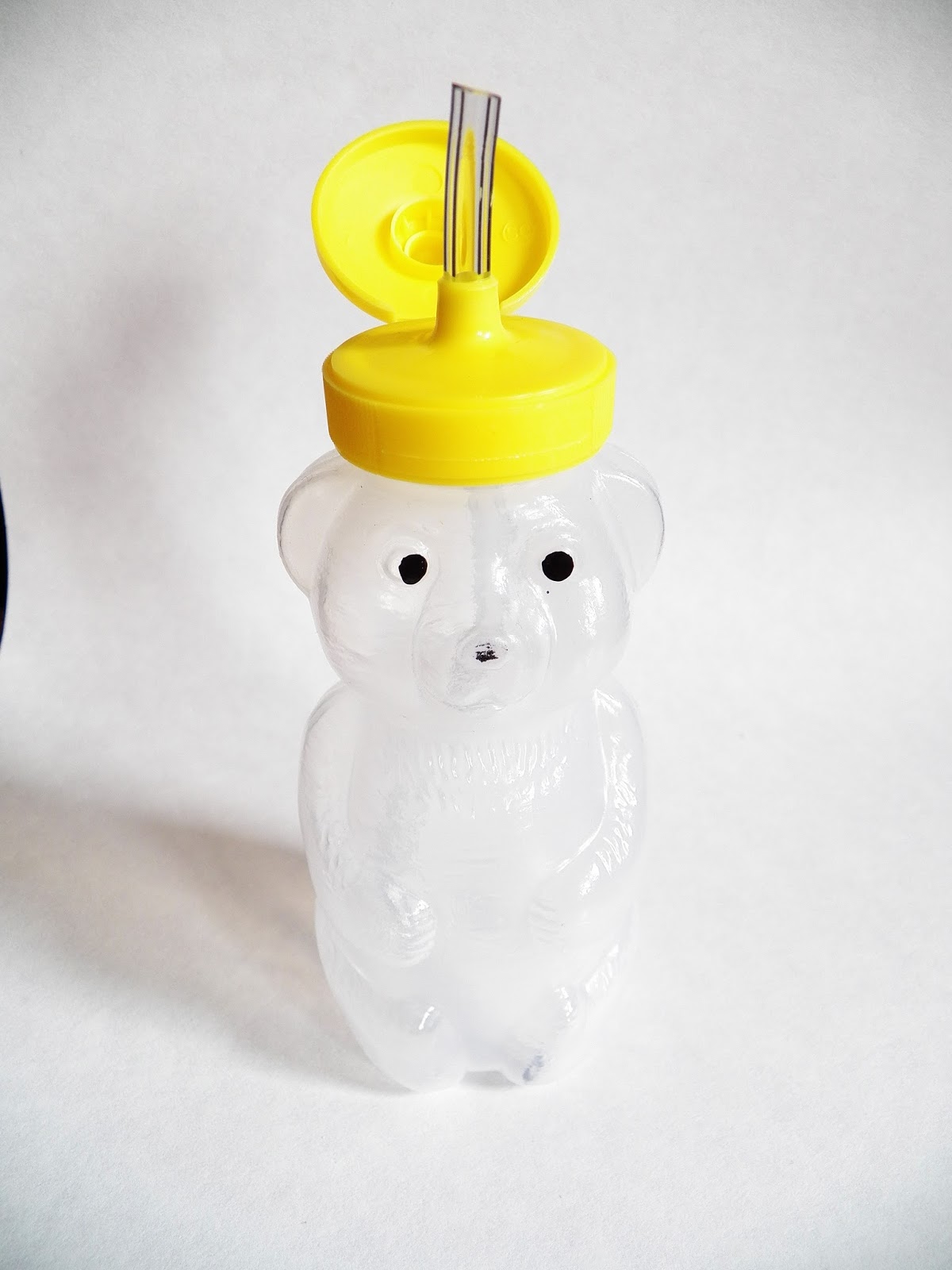
Young children with an identified dysfunction can often be started as early as one-year-old. Many of our clients with Down Syndrome are started this early because we are working on the concept of retraction as a critical oral motor skill that then cascades into other oral motor benefits. Other clients with a low tone diagnosis also benefit from this early intervention. Many of these children are still on a bottle at ages two, three or four; suckling. In virtually all cases, by the age of two, straw therapy can be successfully undertaken. Some children need an assisted transition. I use a squeezable "honey bear", emptied, cleaned, filled with slightly thickened liquid and retrofitted with a straw. The child can still clutch the "honey bear" bottle while learning to draw liquid up through the straw. The care-givers for low-tone children who may not be able to pull liquids up on their own initially can gently squeeze the liquid up to assist.
Exactly what is straw drinking? Normal straw drinking requires complex movement from the jaw, lips and tongue. Through the coordination of these movements a vacuum draw is created. Each of our speech sounds are made with a different combination of these graded movements.
Over many years I developed a successional group of straws with each individual straw working on a specific part of those graded movements. After initial experiments with ordinary straws, which offer such limited results as to be therapeutically unusable, I located every conceivable type of straw produced and jury-rigged them when necessary. Ultimately I was compelled to persuade straw manufacturers to custom-produce a few of the straws for the specific attributes that I needed.
This hierarchy of straws progresses through a matrix that advances from multiple sips to single sips and then from thin liquids to thickened liquids while varying the straw's diameter, overall length and the structural complexity via elbows, curves, twists and placement of a lip block.
How would therapy begin? At the outset - making sure that the client is sitting up straight in a stable position receptive to drinking - I give them a simple, straight, regular-diameter straw to see how they will use it, allowing them to drink from it like they normally would. I place my finger at the point where the straw is entering the mouth so that I can then take the straw out and measure the length from the entry point to the tip of the straw that is inside the mouth. There are several things to watch for at this stage. Is the straw more than 1/4 - 1/2 of an inch inside their mouth? If so, then they are either suckling it or biting it. Is the client biting the straw? If so, that could be an indication of jaw instability. The correct position for the therapeutic use of the straw is with jaw stability, tongue retraction and lip rounding to fully enable drawing.
The first straw in my hierarchy is cut to the length that I measured above. The straw has a lip block which encourages sealing and rounding. Over a succession of visits as the client exhibits proficiency I surreptitiously reduce the length from the lip block to the internal tip until the client has achieved primary retraction and at least minimal lip rounding. At this point the client is said to be therapeutically drinking from a straw and I am free to move through the remainder of my hierarchy. Clients are taking these straws home and using them daily for drinking all thin liquids. As they progress, thickened liquids and purees are introduced using specifically identified straws in the hierarchy. The clients use these straws to drink 3-4 ounces once a day. As each straw is mastered or seems to be too easy, I move onto the next. For some clients this may be as frequently as one new a straw a week, as it might be in the case of a developmentally normal child with an interdental lisp. For this client a full, successful course of treatment may last as short as four months.
Other clients, depending on the diagnosis, for example cerebral palsy, the therapy, while still effective, may continue for a longer period of time. A client with Down Syndrome may complete the full treatment in one to two years and we often find that this t ype of therapy reduces the duration of speech therapy as they get older. Clinicians who are targeting specific sounds in therapies with their clients will find that therapeutic straw treatments have proven to be effective with the standard production of /t, d, l, n, k, g, s, z, ch, sh, j, & r/.
Clients with velo-pharyngeal insufficiency are another population that benefit from straw drinking. For them it increases tongue retraction, changes resonation and elevation of the velum. Clients recovering from Cerebral Vascular Accidents (CVA) often exhibit lip asymmetry. Therapeutic straw drinking works to bring their lips to symmetrical midline thereby improving speech clarity.
An extra advantage of treatment through therapeutic straw drinking is that it can be equally effective with clients irrespective of cognitive abilities. That is the therapeutic results, (tongue retraction and tongue grading), for a client with severe cognitive impairment and limited or no language skills can be almost the same as with a developmentally normal child or adult. This adds to its promise as an important tool in the arsenal of all oral motor and speech pathologists.” http://speech-language-pathology-audiology.advanceweb.com/Article/Part-I-Straws-Using-Simple-Tools-in-Oral-Motor-Therapy.aspx
I personally attended the courses presented by the master, Sara Rosenfeld-Johnson and truly recommend to have a look, get familiar or buy a set for yourself to try http://www.talktools.com/straw-kit/

Benefits of Playdate

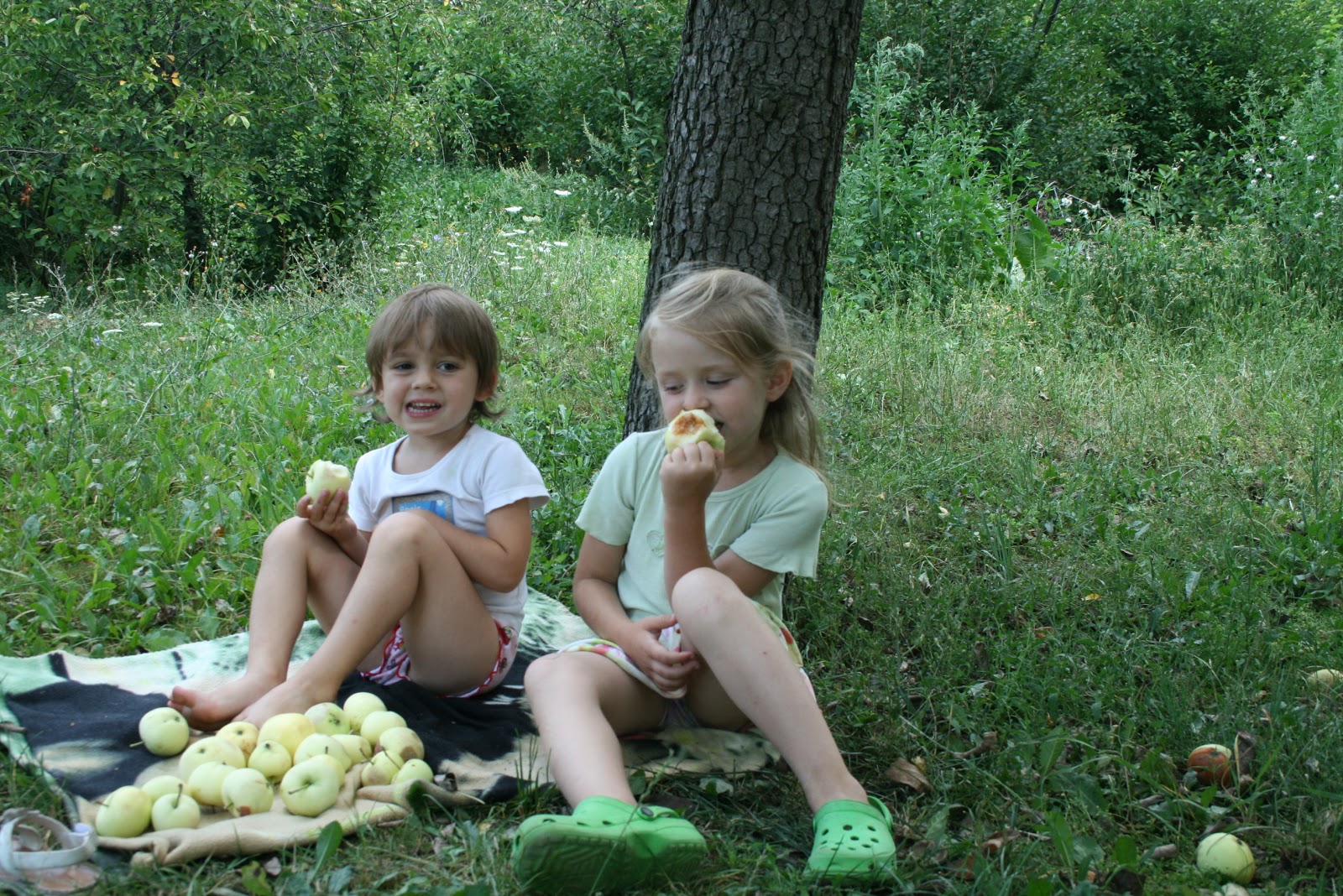
Children learn through playing with other children, so it is important that they get plenty of opportunities to do so. A play date is a great way to help children to grow socially, intellectually and physically.  They learn how to interact, cooperate and collaborate to plan together, to agree on things, and what to do when they disagree. They gain the knowledge how to share, take turns, be polite and respectful. Kids learn to think about what another child wants or needs. These help them to learn about empathy, the foundation of tolerance. The empathy, which is the antidote for bullying. Children get also a chance to learn new games, in different setting, with the toys that they don’t have at home. And of course while doing some projects they master fine motor skills or burn off their energy while mastering a monkey bar. There is something unusual about a play date, unstructured, unfettered, unencumbered play. It gives kids the opportunity to imagine, pretend, play silly and be proud of their own abilities.
A structure of a play date is really up to a hosting parent, who decides what and where the children will play (a playground, garden, park, museum, or home), whether they will play on their own just under some supervision or if an activity/project is going to be set and offered. The main thing is that the children get to play together. From my experience some careful planning can make play dates more likely to be successful and enjoyable for all participants. This includes keeping a play date short (90 minutes up to two hours), providing a healthy snack, so the kids can watch and learn manners and try new food they wouldn’t even touch at home, choosing kids that genuinely like each other, sticking to a small group up to four, and putting aside toys that might cause sharing problems. Even young children can benefit from play dates. Infants and toddlers might play side by side, commonly known as a parallel play. This is an important stage in peer relationships. As they get older, they will start to play more together and practice such things as sharing and speaking their minds instead of hitting.
 
You wonder how parents will benefit from a play date?  They can meet other families with whom they can become friends, brainstorm some ideas or watch own child how does he make a new friend and act in a group.
 
When you arrange a play date don't overplan - stay simple.  For example, when a playdate is happening at home get out clothes for a dress up, an old bed sheet to play a parachute, some puppets, let them set up a store with things to sell and play money; give them some space, some papers, crayons, glue and let them be creative. Make sure to ask the kids what they'd like to do. Make them feel a part of the planning. Be prepared to introduce something new, especially if an activity doesn't appeal to one of the kids. Get some print outs in advance as a back up plan. For worksheets’ and printable go to http://www.education.com/worksheets/
Soon after the playmates arrive, talk about what the rules are in your home. Tell what is OK and what is not., e.g. if they are they allowed to take what they want out of the kitchin, play with the water, turn on the computer, etc. Make sure your child takes some responsibility for his friend. Don't allow any physical fighting - that would be when you might want to separate the kids for a short time. If these are very young kids, 3 and under, you should be in the same room. If they are older, 5 to 10, it's still a good idea to stay within earshot. Plan your schedule so you're fully available. You may be called upon to be referee, or at the very least, activity director. For the activities go to http://www.education.com/activity/
 
 “…Here are just a few of the proven scientific benefits of letting our kids get messy and doing something besides clicking those darn keypads and video controllers and paper and pencil tasks:

1. Play boosts children’s creativity and imagination. Play gives children the chance to invent, build, expand, explore and develop a whole different part of the brain.
2. Play stretches our children’s attention span. Playing outdoors just 30 minutes a day increases child’s ability to focus and pay attention.
3. Play and rough-housing boost boys’ problem solving abilities. The more elementary school-boys engaged in rough-housing, the better they scored on a test of social problem solving. (Don’t ya love that one!)
4. Play boosts self-confidence and self-regulation. Kids learn to become masters of their own destiny without an adult directing, pushing, managing or scheduling.
5. Play forges friendships, strengthens social competence and teaches social skills. Undirected play allows kids to learn how to work in groups, share, negotiate, communicate and develop core social skills they need not only now but for the rest of their lives.
6. Play helps kids learn to enjoy just being in their own company, entertain themselves and develop identity. Ease that guilt when your kid says, “I’m bored, Mom!”
7. Play reduces children’s anxiety and diminishes stress. A study published in the Journal of Child Psychology and Psychiatry shows that play is also critical for our children’s emotional health because it helps kids work through anxiety and reduce stress.
8. Play creates joyful memories of childhood. Come on, no kid is going to remember the car pools and worksheets but the swings, jumping in leaves, playing leapfrog in the mud, blowing bubbles, building forts–those are the unforgettable childhood moments. Sigh!
9. Play boosts physical health and reduces risk of obesity. Henry Joseph Legere, MD, author of Raising Healthy Eaters points out: “Rises in screen time have led to the rise of a sedentary lifestyle for our children. In 1982, the childhood obesity prevalence in the United States was actually less than 4 percent. By 2004, that number had grown to about 30 percent.”
9. Play expands our kids minds and neurological development. Self-initiated play improve skills such as guessing, figuring, interpreting and is important to brain development and learning
10. Play builds new competencies, leadership skills, teaches lifelong hobbies, and develops resilience. “Play is what allows kids to manipulate their environment,” says a report written by Kenneth Ginsburg, M.D. of the AAP, “And how you manipulate your environment is about how you begin to take control, how you begin to develop your senses, how you view the world.”
11. Play nurtures the parent-child bond. Child-driven play also improves our parent-kid relationship. Play offers a wonderful opportunity for parents to see the world from our children’s eyes as well as strengthen our relationship when we join in." To read more go to